
New demonstration facility showcases the potential of hydrogen-powered large engines for a secure, flexible, and low-carbon energy supply
Graz, Austria – November 2026 – With the commissioning of the Zero-Impact Demonstrator (LEC ZID), the Large Engines Competence Center (LEC) and INNIO are demonstrating how hydrogen-powered large engines can contribute to energy security and the decarbonization of future energy systems. The demonstrator is based on a Jenbacher Type 6 engine from INNIO and delivers an electrical output of two to three megawatts. Compared to a conventional reference technology, greenhouse gas emissions can be reduced by up to 97 percent.
5 Questions for Zero-Impact Demonstrator Cooperation
Dr. Andreas Kunz, CTO, INNIO: What significance does the cooperation with the Large Engines Competence Center (LEC) in Graz have for INNIO?
LEC has been an important research partner for INNIO for more than 25 years. Together, we develop technologies for more efficient, fuel-flexible, and low-CO₂ energy solutions. Our goal is to create resilient energy systems that strengthen economic growth, competitiveness, and security of supply.
Prof. Dr. Nicole Wermuth, Scientific Director at LEC and Professor at Graz University of Technology: What does “Zero Impact” mean in the context of the LEC Zero-Impact Demonstrator?
“Zero Impact” means minimizing the environmental impact of a technology. This approach considers not only the direct emissions of an engine, but also upstream factors such as hydrogen production and transportation. According to the methodology developed by LEC, a technology is considered “Zero Impact” if its environmental impact is less than five percent of that of a comparable reference technology. With the LEC Zero-Impact Demonstrator, greenhouse gas emissions have been reduced by 97 percent compared to a conventional natural gas engine.
Dr. Andreas Kunz, CTO, INNIO: What role does hydrogen play for INNIO?
Hydrogen can be an important building block of future energy systems. INNIO is among the first providers of hydrogen-ready engines in the megawatt range. Together with the Net Zero Innovation Hub, we recently demonstrated a fully hydrogen-based solution for data centers. This project proved that hydrogen technologies can operate reliably under real-world conditions, including rapid load changes and full-load operation.
Dr. Andreas Kunz, CTO, INNIO: What are the most important outcomes of the collaboration with the LEC?
The partnership has made a significant contribution to the further development of the Jenbacher engine platforms. Together, we have developed new combustion concepts for alternative gases and explored sustainable energy solutions. A key focus has been on long-term research into renewable gases, particularly hydrogen technologies.
Dr. Thomas Jauk, CEO, LEC: What is the significance of the funding provided through the COMET Program?
Funding through the COMET Program provides an essential foundation for long-term research and development projects such as the LEC Zero-Impact Demonstrator. The success of the project is based on the close collaboration between research institutions, industry partners, and public stakeholders. Long-term partnerships, such as those with INNIO, are especially crucial for technologies that support climate-neutral and resilient energy systems. The COMET research program LEC GETS provides the continuity and infrastructure needed to ensure that new technologies are not only developed, but also advanced together with industry partners toward practical application and industrial-scale deployment.
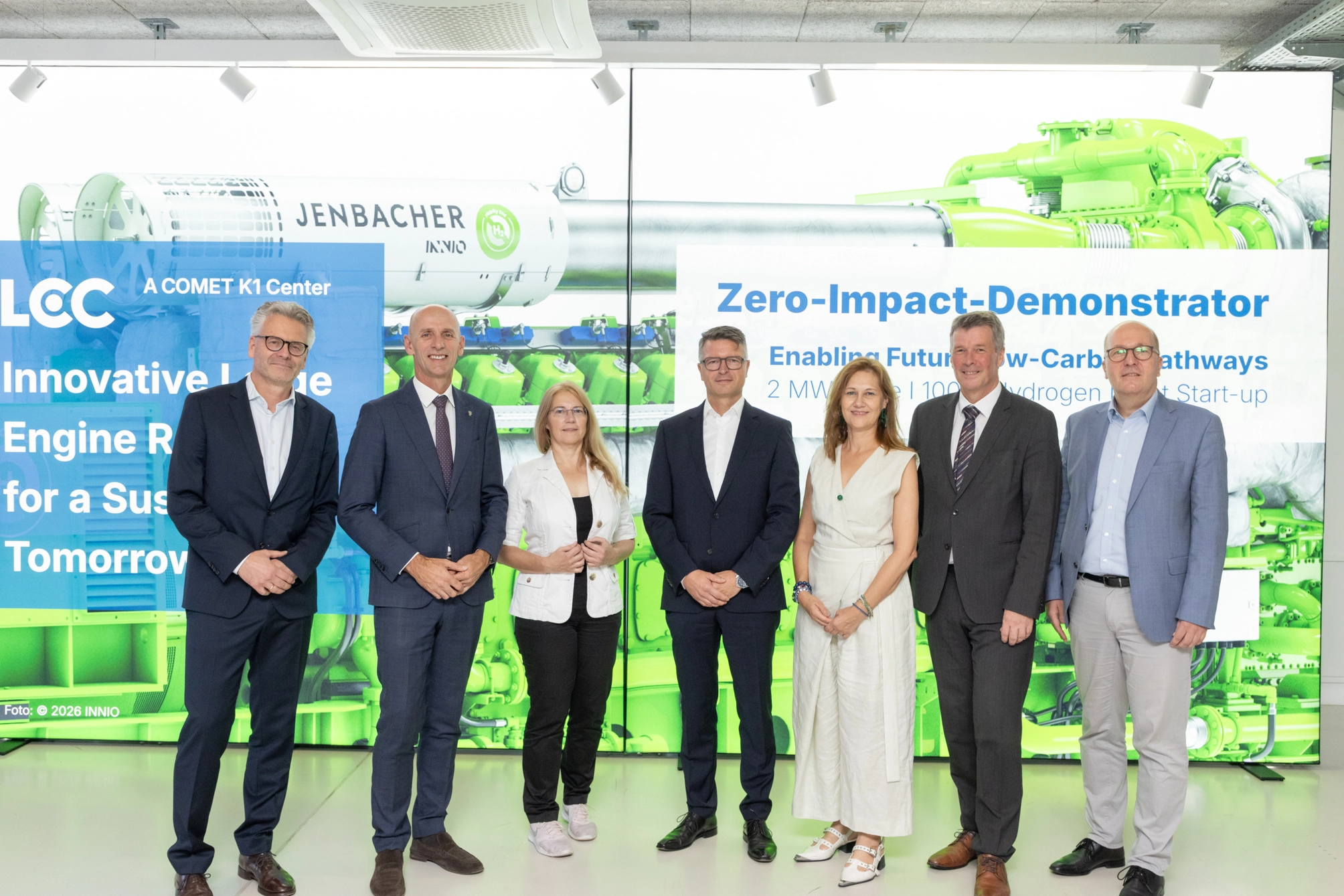
Resilient Energy Solutions for Growing Power Demand
The increasing demand for electricity driven by electrification and the rapid global expansion of AI applications is fueling the need for resilient and scalable energy solutions. At the same time, the growing share of renewable energy sources is increasing demand for technologies capable of flexibly providing power when weather-dependent generation sources are not sufficiently available.
The hydrogen-powered large engine of the Zero-Impact Demonstrator can provide additional power within minutes, making it a flexible backup solution for future energy systems.
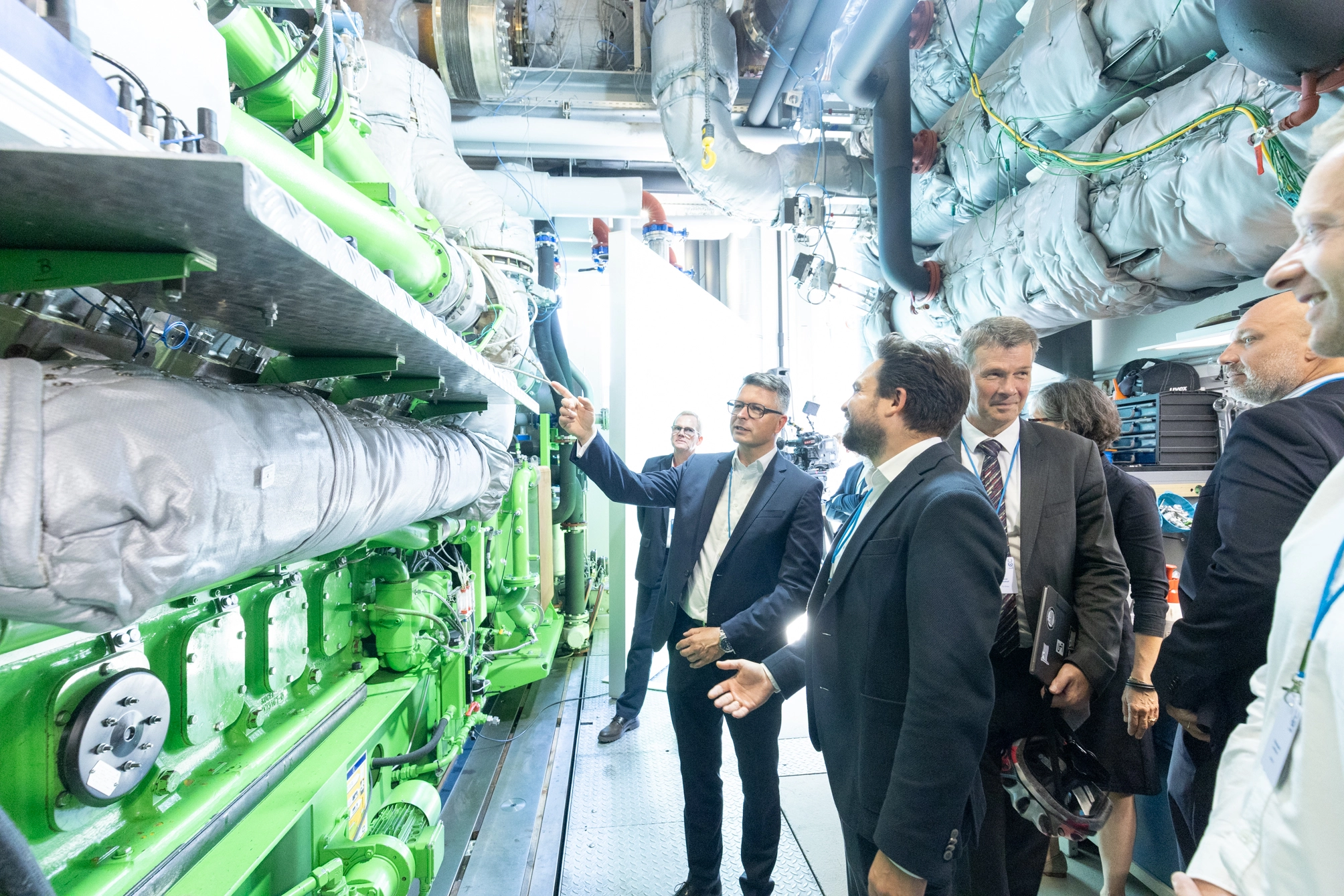
Potential for Industry, Data Centers, and Critical Infrastructure
Developed as part of the COMET research program, the demonstration facility serves as a test environment for energy systems in industrial applications, data centers, critical infrastructure, and decentralized energy supply solutions.
Data centers in particular face the challenge of meeting rapidly growing energy demand driven by AI applications while maintaining high standards of energy security and sustainability.
Efficient Use of Hydrogen
The LEC ZID combines a hydrogen-powered large engine with advanced exhaust gas aftertreatment technology to form a highly efficient overall system. The facility is fully integrated into the energy system of TU Graz, feeds electricity into the local grid, and additionally enables the utilization of up to 1.5 megawatts of thermal output through heat recovery.
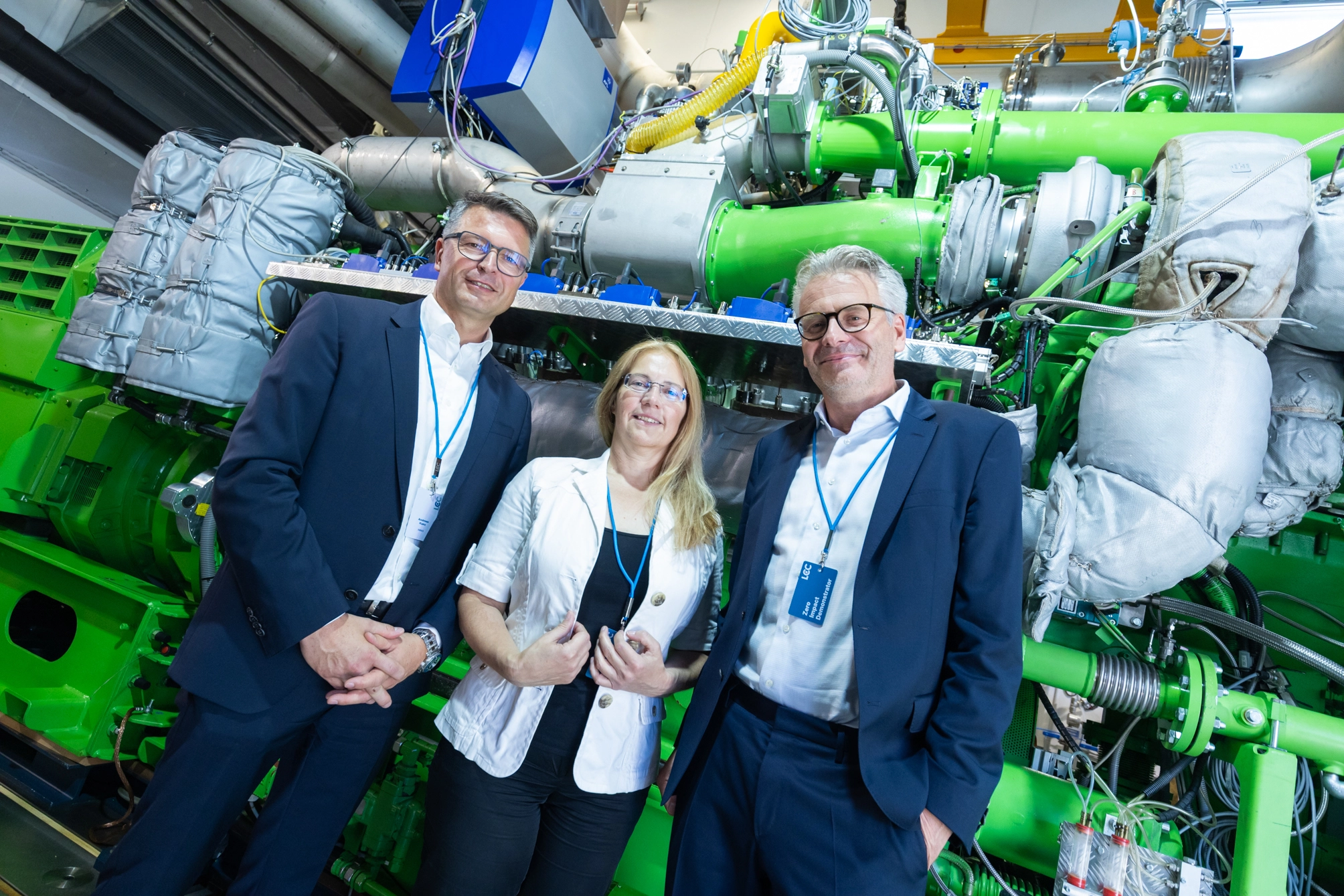
More Than 25 Years of Joint Innovation
The collaboration between INNIO and the LEC spans more than 25 years. During this time, the partners have developed numerous technologies for efficient and fuel-flexible energy systems. A particular focus has been placed on renewable gases and hydrogen technologies, which have significantly contributed to the advancement of the Jenbacher engine platform.
The Zero-Impact Demonstrator was developed as part of the COMET research program “LEC GETS – Green Energy and Transportation Systems” and will continue to serve as a central research and demonstration platform in the future.
The facility demonstrates how research, industry, and public funding can work together to accelerate innovation that combines energy security with climate goals. At the same time, the demonstrator highlights the potential of hydrogen-powered large engines to contribute to a resilient, flexible, and low-carbon energy supply for the future.
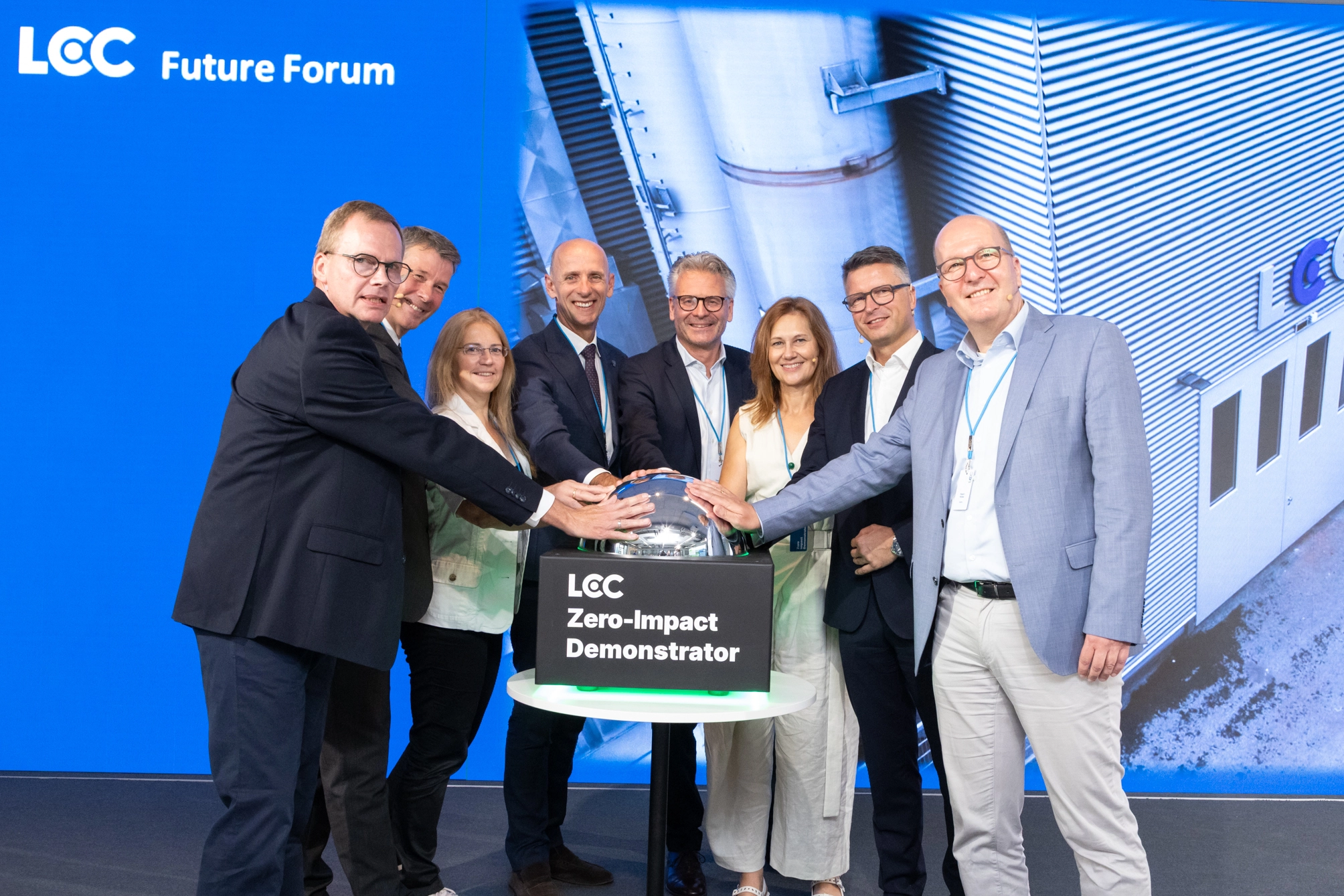
More Information
Further information and comments on the launch of the Zero-Impact Demonstrator (LEC ZID) can be found in the press release issued by the Large Engines Competence Center (LEC): https://www.lec.at/news-entries/meilenstein-fuer-die-energiewende-lec-nimmt-zero-impact-demonstrator-lec-zid-fuer-klimaneutrale-energieversorgung-in-betrieb/
The Austrian Broadcasting Corporation (ORF) has also reported on the hydrogen engine at the LEC: https://steiermark.orf.at/stories/3369223/
The Zero-Impact Demonstrator is the result of more than 25 years of collaboration between INNIO and the Large Engines Competence Center (LEC) at the TU Graz. The partnership began with the first research activities on the T6 engine series and reached a major milestone in 2005 with the successful operation of a Single Cylinder Engine (SCE) running on 100% hydrogen. In 2023, the collaboration was further expanded through the development of an ammonia combustion process for Jenbacher engines. With the launch of the Zero-Impact Demonstrator in 2026, this long-standing partnership continues its shared innovation journey, bringing together decades of expertise in the development of sustainable combustion technologies for climate-neutral energy supply.
For more information: https://www.lec.at/news-entries/meilenstein-fuer-die-energiewende-lec-nimmt-zero-impact-demonstrator-lec-zid-fuer-klimaneutrale-energieversorgung-in-betrieb/
100% Hydrogen Backup Power for Data Centers
INNIO and Net Zero Innovation Hub deliver world-first 3 MW demonstration of 100% hydrogen backup power for data centers.

